
Q4 Tax Planning for Small Businesses Before Year-End
Quick Summary: September is an ideal time for small business owners to begin Q4 tax planning. With most of the year’s financial activity already recorded, you can review year-to-date profit, refine tax estimates, organize deductions, and make intentional decisions before December 31. Prosperity Financial Accounting helps businesses use proactive accounting and reliable numbers to reduce uncertainty and avoid last-minute tax surprises.
Why Start Q4 Tax Planning in September?
By September, your business has enough year-to-date activity to provide a meaningful picture of where it may finish the year. Waiting until January to review the numbers can limit your options and turn business tax preparation into a stressful rush. Starting now gives you time to understand your financial position, adjust course when needed, and make confident financial decisions before year-end.
For small business owners, proactive accounting is about more than filing a return. It means using current bookkeeping and clear financial reporting to plan ahead rather than react after decisions have already been made.
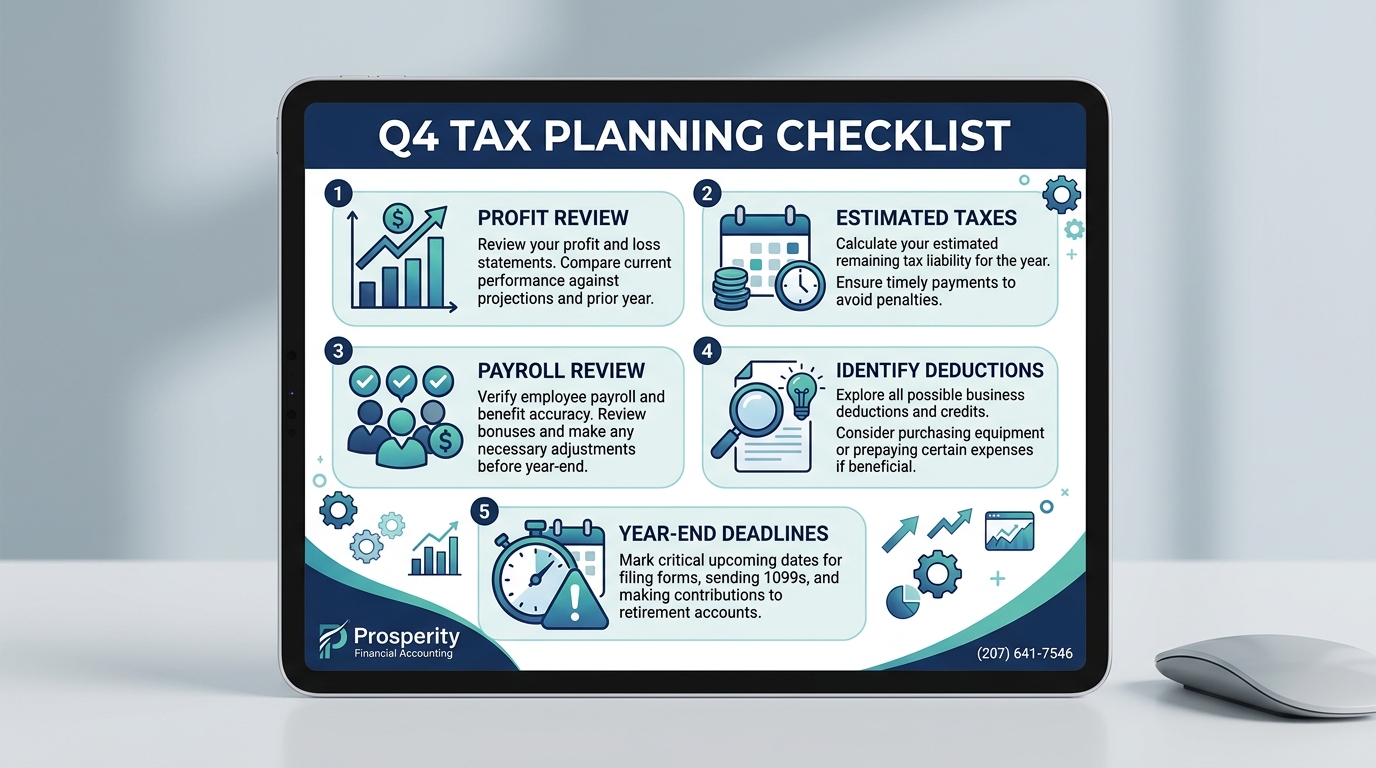
Review Your Year-to-Date Profit
Your profit and loss statement is one of the most useful tools for Q4 planning. Review revenue, operating expenses, and net profit through August or September, then compare those results with prior periods and your expectations for the remainder of the year.
It is also important to remember why profit does not always equal cash in the bank. Outstanding customer invoices, loan payments, inventory purchases, and credit card balances can all affect cash flow. Knowing your numbers helps you see both your taxable income and the cash available to cover upcoming obligations.
If your books are behind, catch-up bookkeeping services can be a valuable first step. Accurate small business accounting creates the financial clarity needed for useful tax planning.
Estimate Tax Payments Before Deadlines Arrive
September is a smart time to estimate your expected tax liability based on your current profit and projected Q4 income. If you make estimated tax payments, this review can help you determine whether your planned payments are still appropriate and whether you need to set aside additional funds.
A thoughtful estimate can help prevent an unpleasant balance due at filing time. It can also support better cash-flow planning, especially for businesses with seasonal revenue, commission-based income, or a strong final quarter.
Check Payroll and Owner Compensation
Take time to review payroll records, employee classifications, and year-to-date wages. Confirm that payroll tax filings and payments are current, and make sure employee information is accurate before year-end forms are prepared.
Business owners should also revisit owner compensation. For S corporations in particular, reasonable compensation is an important consideration. The right amount depends on factors such as the services you perform, your responsibilities, industry norms, and the business’s financial results. Rather than relying on a rule of thumb, discuss your situation with an accounting professional who can help you evaluate how much you should pay yourself.
Organize Deductions and Supporting Records
Organized records make tax return preparation smoother and help ensure legitimate deductions are not overlooked. Review your expenses now and gather documentation for items such as business mileage, travel, supplies, software subscriptions, professional fees, home office expenses, and contractor payments when applicable.
Keep receipts and supporting records connected to the related transaction whenever possible. Clean, current bookkeeping gives you reliable numbers for planning and makes it easier to respond if questions arise later.
Plan Equipment Purchases Thoughtfully
Buying equipment, software, or other business assets before year-end may have tax implications, but a purchase should support a genuine business need—not simply a desire to create a deduction. Consider whether the item will improve operations, whether the business has the cash flow to support it, and when it will be placed in service.
Tax treatment can vary based on the type of asset, the business structure, and current tax rules. Reviewing a planned purchase in advance can help you weigh the operational value alongside its potential tax impact.
Use Q4 to Avoid Tax Surprises
The goal of September tax planning is not to predict every detail perfectly. It is to identify likely outcomes early enough to take practical action. When your bookkeeping is current, your payroll is reviewed, your deductions are organized, and your income is projected, you are far less likely to face a surprise tax bill after the year ends.
Prosperity Financial Accounting provides remote accounting services, including bookkeeping, tax planning, payroll support, business tax preparation, and help to e-file tax returns. Our technology-forward approach is designed to give small business owners clear reporting, financial confidence, and a more stress-free accounting experience.
Get Ahead of Year-End With Prosperity Financial Accounting
Every business is different, and this information is general guidance rather than personalized tax advice. Consult an accounting professional to discuss your business structure, financial activity, and year-end goals.
There is still time to prepare for a stronger finish to the year. Reach out to Prosperity Financial Accounting before year-end to review your numbers, build a practical Q4 tax plan, and move into tax season with greater confidence.